

If you are an international trader, importer, or exporter operating in the United Arab Emirates, understanding the customs clearance in UAE is essential for smooth and compliant cargo movement. The UAE is one of the world’s busiest logistics and trade hubs, with ports like Jebel Ali, Khalifa Port, and Port Rashid handling millions of tonnes of cargo every year.
However, importing or exporting goods requires adherence to tariff laws, HS classification codes, duties, documentation, and UAE e-clearance procedures. Working with an experienced Customs Clearance Agent in Dubai ensures your shipments are processed quickly, accurately, and without penalties or delays.
Golden Topaz Shipping LLC provides professional customs clearance UAE services to businesses across sectors, ensuring seamless customs processing, compliance support, and timely cargo release.
This guide explains everything importers and exporters need to know about customs procedures in the UAE.

Customs clearance is the formal process through which imported or exported goods are declared to the relevant customs authority, classified under the correct HS (Harmonized System) codes, assessed for applicable duties and taxes, and reviewed to ensure regulatory and documentation compliance before being approved for entry or exit across borders. This process confirms that all trade, safety, and tariff requirements are met and that the shipment is legally authorized for international movement.
Without proper customs clearance, shipments may:
That’s why businesses prefer working with a licensed Customs Clearance Agent to handle documentation, freight coordination, HS classification, and duty assessment.
Customs departments act as the official government authority responsible for regulating international trade, enforcing import and export policies, collecting customs duties and taxes, and overseeing the lawful movement of goods, cargo, and freight across borders.
The primary purpose of the customs clearance process is to review, verify, and inspect shipments being imported or exported to ensure they comply with trade regulations, security standards, documentation requirements, and product restrictions. In simple terms, customs clearance determines whether a shipment is legally permitted and suitable to be received by the buyer or to leave the country of origin.
It is also a critical stage in any global shipping or logistics operation, as proper customs clearance helps prevent delays, penalties, and cargo holds, ensuring goods are delivered safely, legally, and on time.

A Customs Clearance Agent is a licensed professional or organization authorized to represent importers and exporters during the customs clearance process. Their key responsibility is to ensure that shipments comply with customs regulations, tariff rules, HS code classifications, and documentation requirements so that goods can move smoothly across international borders.
A customs clearance agent acts as an intermediary between traders, shipping carriers, and government customs authorities. They handle the preparation and submission of customs declarations, assess duties and taxes, coordinate inspections when required, and address any clearance-related queries. With expertise in trade laws, product classifications, and clearance procedures, a customs clearance agent helps businesses reduce delays, avoid penalties, and maintain full regulatory compliance.
For companies involved in international trade, working with an experienced customs clearance agent is highly beneficial, especially when managing complex documentation, specialized cargo, or multiple country regulations as it ensures faster, more accurate, and seamless cargo clearance.
Navigating customs regulations can be complex for new traders and even experienced businesses. A reliable Customs Clearance Agent in Dubai, UAE acts as your authorized representative to manage the entire customs process on your behalf.
A professional customs agent helps with:
Golden Topaz Shipping LLC ensures your goods are cleared efficiently while minimizing processing time and avoiding costly mistakes.
Getting started with customs clearance in the UAE begins with ensuring that your business is legally registered and authorized to conduct import and export activities. Before a shipment can be cleared through ports, airports, or land borders, companies must complete a few essential trade and customs setup steps to become eligible for customs transactions.
Before importing or exporting goods in the UAE, businesses must first complete basic trade and customs registration requirements, including:
Once registration is approved, companies can begin filing declarations, importing cargo, and processing shipments through ports, airports, and land borders.
To legally import or export goods in the UAE, every business must obtain a Customs Importer / Exporter Code. This code acts as the company’s official identification number within the customs system and is required for filing declarations, clearing shipments, and carrying out any customs-related transactions.
The process generally involves:
The customs code remains linked to the company trade license and must be renewed annually in line with the license validity to keep import and export activities active.
Businesses registered for VAT must link their FTA Tax Registration Number (TRN) with Dubai Customs to enable automated VAT assessment during imports.
This is done through the customs / trade portal by updating VAT profile details and submitting TRN verification.
Once linked, VAT calculations and import declarations are synchronized with tax records.
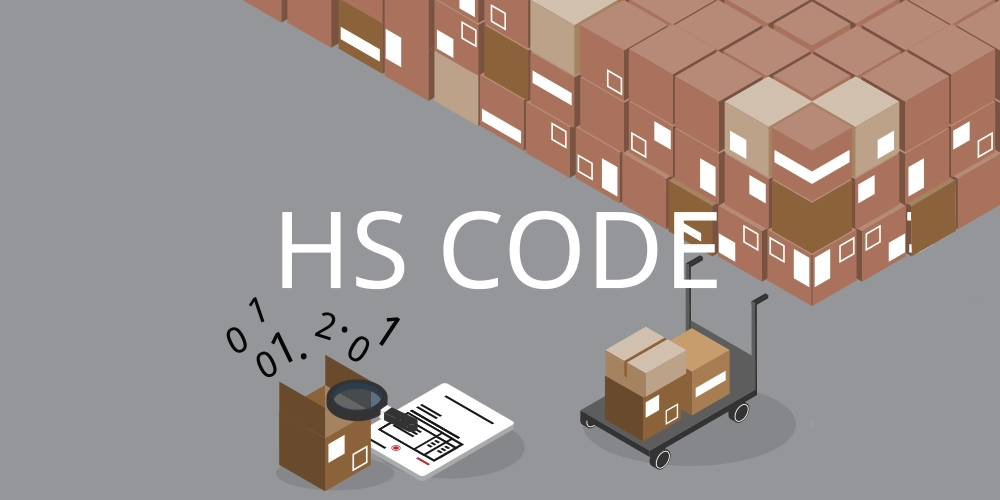 Every imported or exported product must be classified under a Harmonized System (HS) Code.
HS Codes are used to:
Incorrect HS code classification may result in:
As an experienced Customs Clearance Agent in UAE, Golden Topaz Shipping ensures accurate HS classification for all cargo categories, including general cargo, machinery, electronics, FMCG, industrial goods, and more.
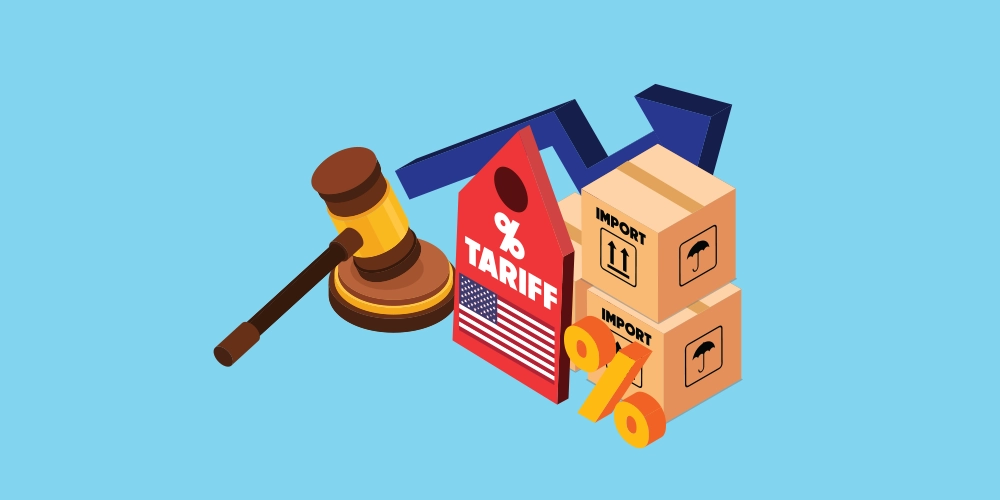
Tariffs and duties vary depending on:
Common UAE customs duty categories include:
Many businesses import through Dubai for re-export to Africa, GCC, and Asia, benefiting from flexible duty structures.
A knowledgeable Customs Clearance Agent in Dubai helps businesses identify applicable tariffs and cost-saving opportunities.
The UAE has introduced advanced digital platforms to simplify customs operations.
Most customs processes today are handled through:
Key stages in UAE e-customs clearance:
Golden Topaz Shipping LLC ensures end-to-end support for Customs Clearance UAE, managing both manual and e-clearance procedures for importers and exporters.
The exact documents depend on cargo type and trade sector, but generally include:
Missing or incorrect documents are one of the most common reasons for clearance delays, which is why partnering with a professional Customs Clearance Agent in Dubai is essential.
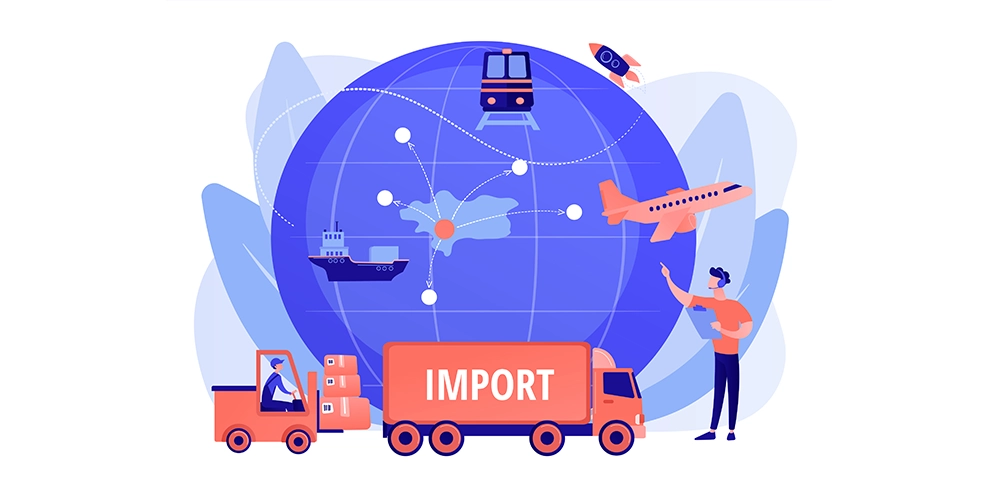
The import clearance procedure in UAE involves a series of steps to ensure that goods entering the country comply with customs laws, tariff regulations, and product control requirements.
The standard import clearance process includes:
Importers or their customs clearance agent submit the required documents, including:
A declaration is created through the UAE customs e-portal with:
Customs calculates:
Payments are completed electronically through the customs system.
Shipments may undergo:
Low-risk cargo is cleared faster under automated risk channels.
Once approved, customs issues the cargo release order, allowing:
Working with an experienced Customs Clearance Agent in Dubai, UAE helps reduce inspection delays, documentation errors, and penalty risks during import processing.
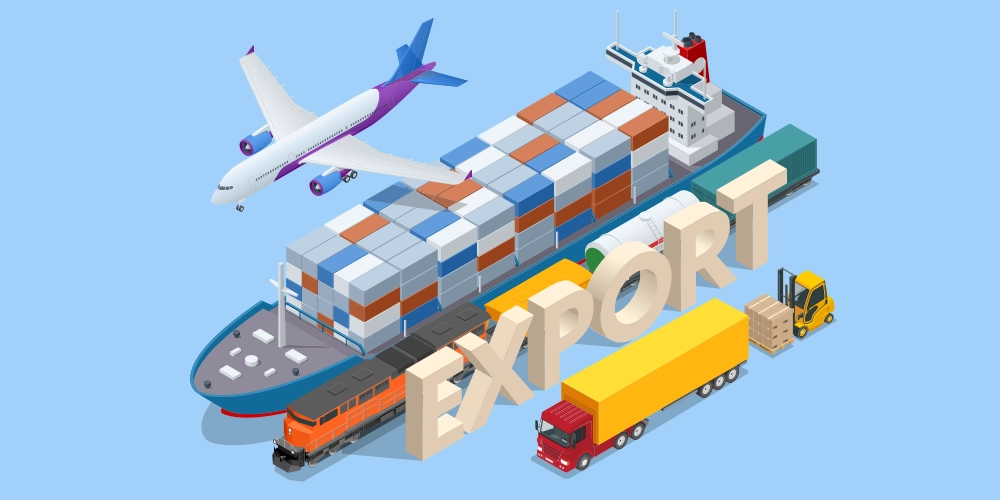
The export customs clearance process ensures that goods leaving the UAE comply with export documentation rules, trade regulations, and destination-country requirements.
The standard export clearance procedure includes:
The exporter or agent prepares:
The declaration is filed through the customs system with:
Customs reviews:
If required, inspection may be conducted.
Once cleared:
After departure, the declaration is closed in the system, and export is officially recorded.
Export clearance is generally faster than import processing; however, accurate HS codes, values, and documents are still mandatory to avoid delays.
Customs procedures differ for:
Key distinctions:
Golden Topaz Shipping helps traders choose the most efficient trade route depending on business goals.
Importers and exporters may face obstacles such as:
Working with an expert Customs Clearance agent ensures compliance, accuracy, and faster cargo processing.
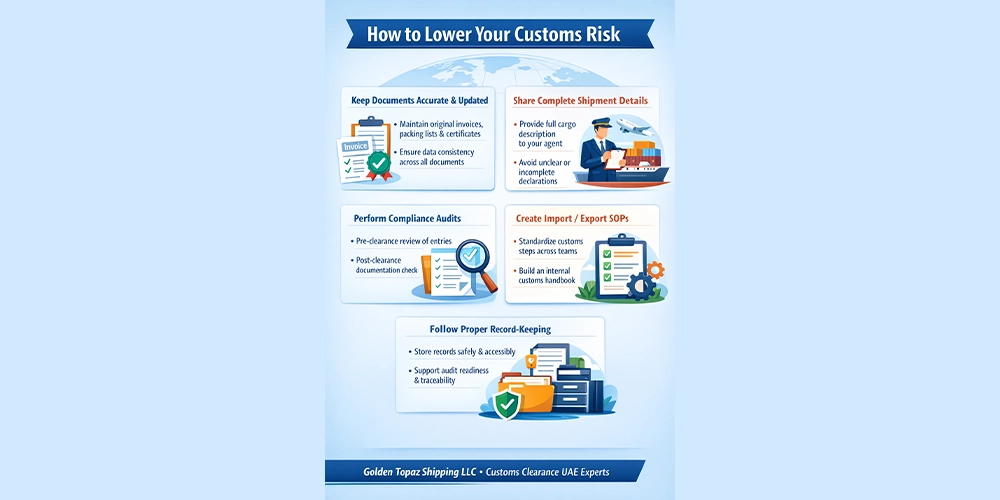
Lowering customs risk is essential for avoiding shipment delays, penalties, and compliance issues during import or export operations. Businesses can significantly improve clearance efficiency by planning ahead, maintaining proper documentation, and following structured internal procedures.
To reduce your customs risk and ensure smoother cargo processing:
By proactively managing documentation, controls, and internal procedures, businesses can significantly minimize customs-related risks and ensure faster, more reliable clearance outcomes.
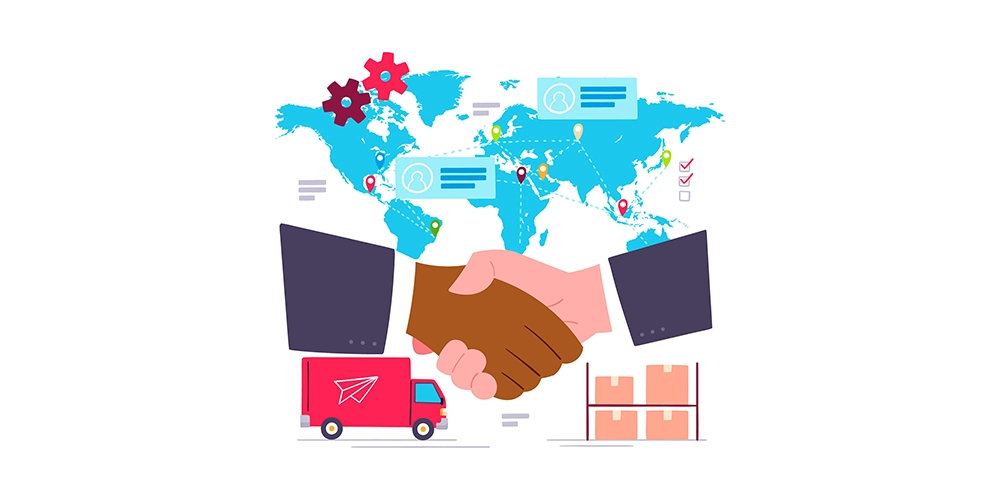
The UAE offers a highly efficient logistics ecosystem but successful international trade depends on proper customs documentation, HS classification, tariff understanding, and professional clearance handling.
Golden Topaz Shipping LLC supports businesses across industries with reliable and professional customs clearance services in UAE.
Our team ensures:
Whether you are a first-time importer or a global trading company, Golden Topaz Shipping LLC delivers efficient and compliant Customs Clearance UAE solutions tailored to your business needs.
Partnering with an experienced Customs Clearance Agent in Dubai ensures your cargo is processed smoothly, legally, and without delays.
We handle import, export, re-export, and free zone clearance.
We ensure a smooth onboarding and clearance process.
Our team coordinates with the relevant authorities on your behalf.
We also advise on cost-efficient route planning.
We focus on speed, compliance, and zero-delay clearance.
A customs clearance agent can manage the full process on your behalf.
They act on behalf of importers and exporters to ensure smooth and compliant cargo clearance.
Customs clearance charges vary based on:
Costs usually include:
Exact pricing is confirmed per shipment.
02 MARCH 2026

24 February 2026
12 February 2026

2 February 2026

16 January 2026

19 December 2025
17 December 2025

6 june 2025
6 june 2025

6 june 2025
Gete local advice for your global request.
Contact us now.

